
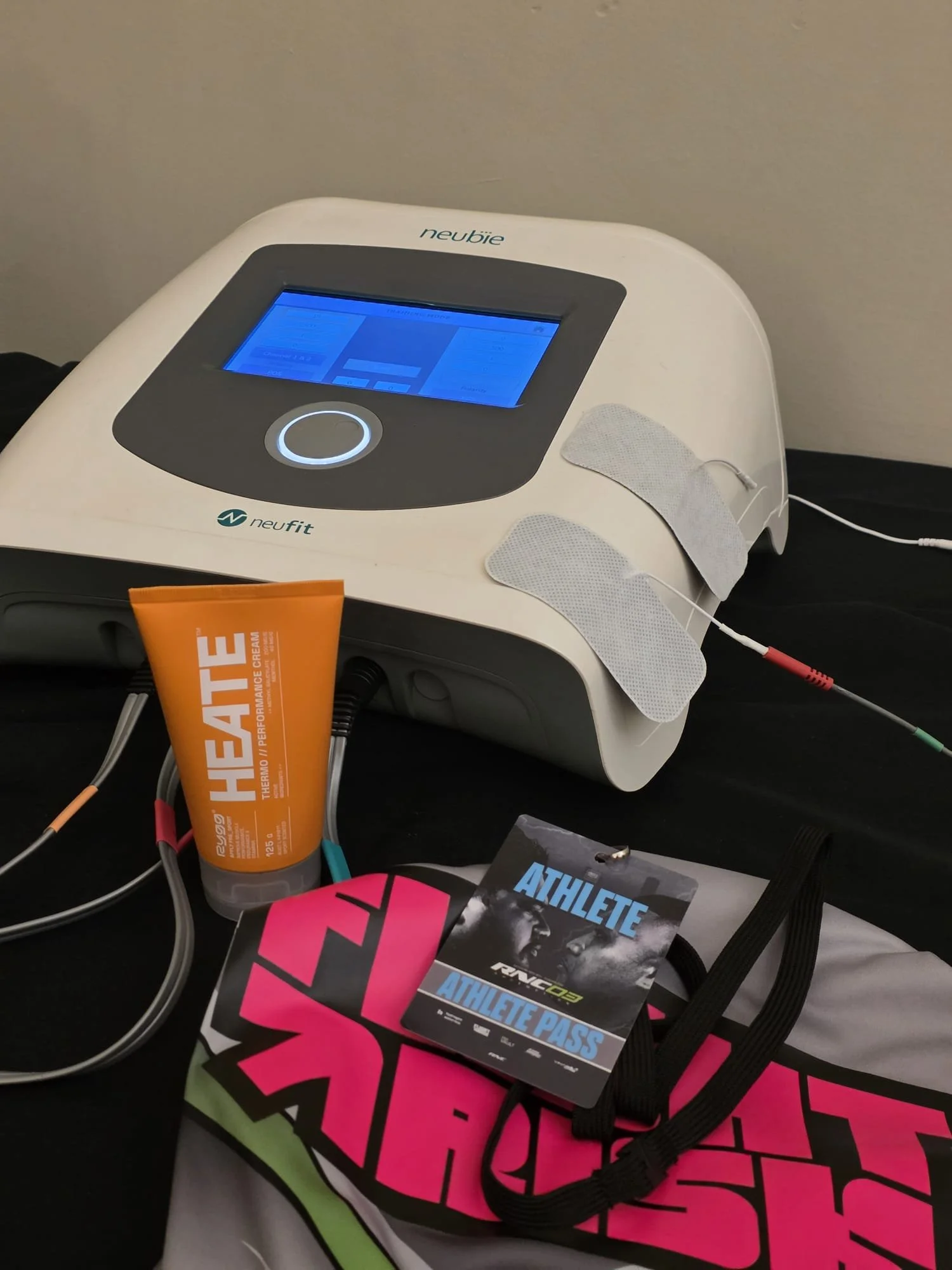
Neufit Neubie Treatment in Springwood
Some people come into physio because they’re in pain. Others come in because they’re stuck.
They’ve done rehab before. They’ve rested. Strengthened. Stretched. Maybe things improved a little, but movement still feels off. A shoulder keeps tightening up. A leg doesn’t feel stable. A muscle won’t properly switch on no matter how much training they do.
That’s usually where we start looking beyond the muscle itself.
At Pursuit Physiotherapy, we use the NeuFit Neubie device to help assess and retrain the way the nervous system controls movement. It’s not a replacement for physiotherapy, but in the right situation, it can help move things forward when progress has stalled.
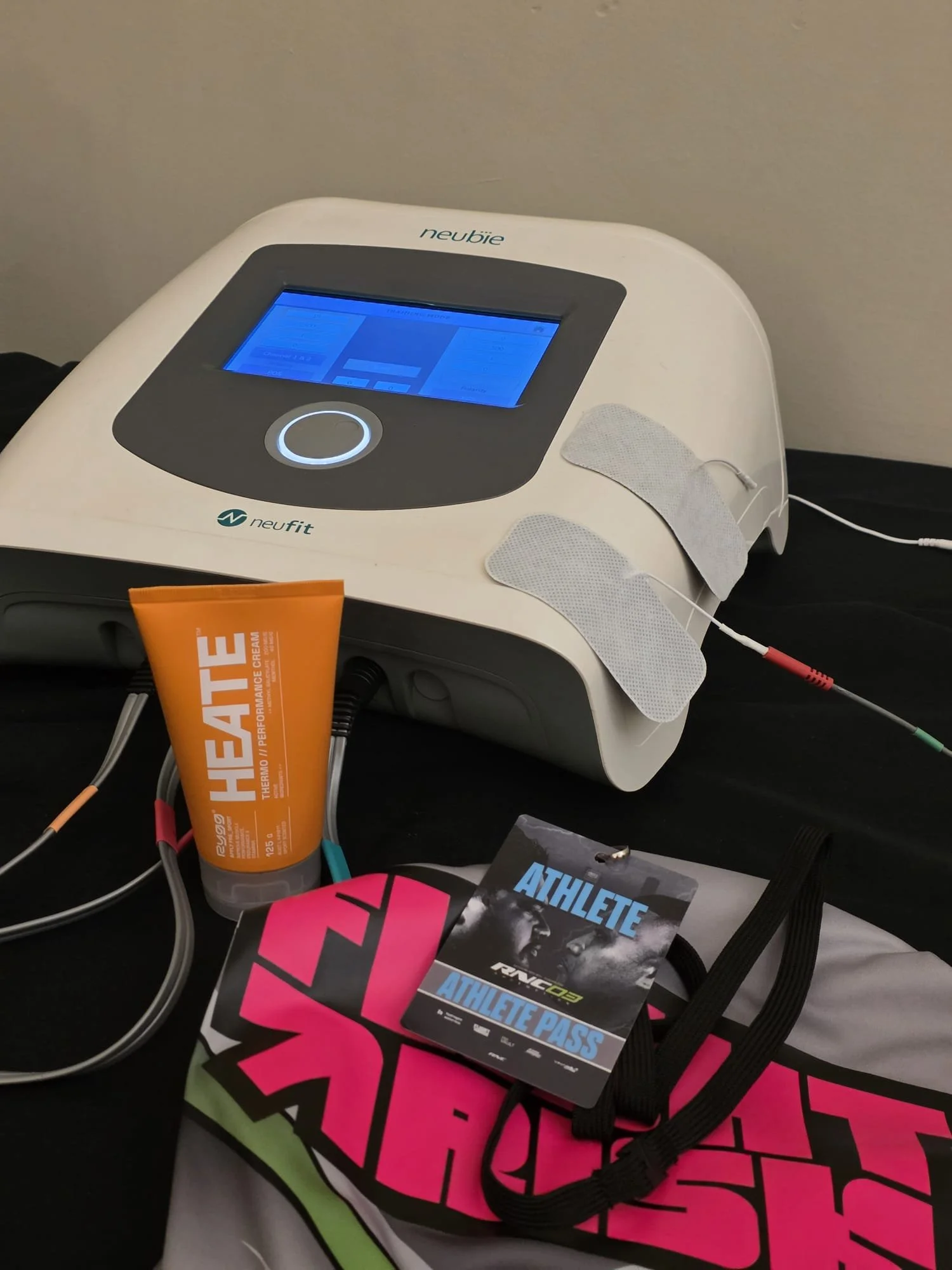
What Is the Neubie?
The Neubie (Neuro-Bio-Electric Stimulator) is a direct current electrical stimulation device used during movement and rehabilitation.
Unlike traditional muscle stimulators that mainly focus on contraction or temporary pain relief, Neubie is used to look at:
Muscle activation
Movement coordination
Compensation patterns
Nervous system control during movement
In simple terms, it helps us see what your body is actually doing, not just what it should be doing.
Neurological Treatment
A lot of ongoing pain and movement issues are neurological before they’re muscular.
You can have:
A strong muscle that activates too late
A joint that keeps tightening because another area isn’t doing its job
Pain that keeps returning because the movement pattern underneath it never changed
This is where Neubie tends to be useful.
By combining electrical stimulation with movement, we can work on improving how the nervous system recruits and coordinates muscles during real movement — not just isolated exercises.
Neurological-based Neubie treatment may help with:
Persistent low back pain
Movement asymmetries
Muscle inhibition
Poor coordination or stability
Chronic compensation patterns
For many people, the biggest change isn’t just pain reduction. It’s that movement starts feeling smoother and more reliable again.
Remedial Therapy – Neubie Glove
The Neubie Glove is used more for hands-on treatment and tissue work.
Instead of applying treatment through standard pads, the conductive glove allows the clinician to work directly over muscles and soft tissue while delivering stimulation through the device.
That combination can be useful for:
Tight or guarded muscles
Trigger point areas
Restricted movement
Areas holding chronic tension
The treatment feels different from a normal massage or remedial session. Some spots barely react, while others light up immediately. Those stronger responses often point toward areas the nervous system is protecting or overworking.
The goal isn’t just to “release tightness,” but to improve how the area functions afterwards.
Rehabilitation
This is probably where Neubie fits best.
A lot of rehab stalls because the body starts compensating. One area stops contributing properly, another area picks up the slack, and eventually the whole movement pattern becomes inefficient.
You see it all the time with:
Hamstring strains
ACL rehab
Shoulder injuries
Ankle instability
Post-surgical recovery
The strength may come back, but confidence and control often don’t.
During rehab sessions, Neubie is used while performing movement and exercise. That might include:
Step-downs
Lunges
Shoulder loading drills
Stability work
The aim is to retrain movement while the nervous system is actively receiving feedback.
For people who feel stuck in rehab, this is usually the point where things start making more sense.
Hypertrophy & Performance
Neubie isn’t only used for injury rehab.
Some athletes and active clients use it as part of performance training and hypertrophy-focused programs.
One reason is muscle recruitment.
Sometimes a muscle isn’t fully engaging during training, even if the exercise itself looks fine. Neubie can help improve awareness and activation during loaded movement, particularly in areas that are difficult to recruit properly.
This can be useful for:
Glute activation
Quad recruitment
Shoulder stability training
Symmetry work
Training around previous injuries
It’s not a shortcut to muscle growth, and it doesn’t replace proper strength programming. But it can help improve the quality of muscular recruitment during training.
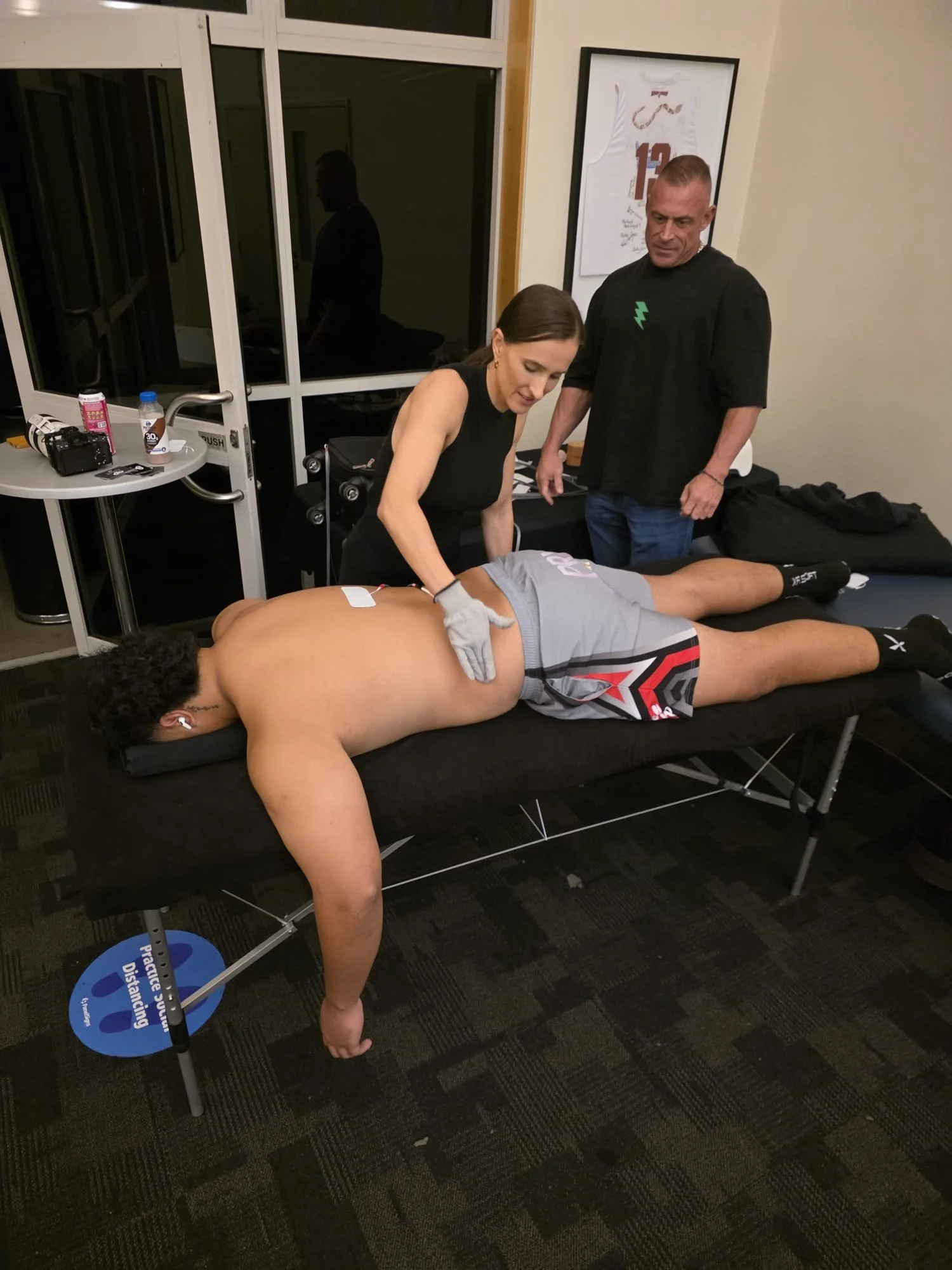
What a Session Feels Like
Most people describe Neubie as unusual at first.
Some areas feel mild. Others feel much stronger, especially around areas that aren’t functioning well.
That response usually settles as movement improves and compensation decreases.
Sessions are active, and most people notice changes more in movement quality than anything else.
Is Neubie Right for Everyone?
No.
Some people respond really well to standard physiotherapy and don’t need additional tools. Others hit a plateau where the issue is less about strength and more about control and coordination.
That’s usually where Neubie becomes relevant.
Before starting treatment, we assess:
Your injury history
Movement patterns
Goals
Whether Neubie is actually appropriate for your situation
Because at the end of the day, the goal isn’t to use a device for the sake of it. The goal is getting you moving properly again.
FAQ
-
Not usually, but some areas can feel intense, especially where there’s poor muscle activation or compensation. The intensity is adjusted to your comfort level.
-
No. It works alongside exercise rehab, not instead of it.
-
No. While athletes use it for performance and recovery, it’s also commonly used for everyday injuries, chronic pain, and post-surgical rehab.
-
That depends on the condition, how long it has been going on, and your rehab goals. Some people notice changes quickly, while others need a longer progression.
-
Yes, when used appropriately by a trained clinician. Certain conditions may not be suitable, which is why assessment comes first.
Neufit Neubie Treatment in Springwood
If you feel like your rehab has plateaued, or your body still isn’t moving the way it should despite doing the work, Neubie may be worth exploring as part of your treatment plan.
Book an assessment with Pursuit Physiotherapy to see whether it’s suitable for your situation.