
Exercise Physiologist for Sciatica: Rebuilding Strength After Back Pain
Sciatica can leave you in a strange position once the worst of the pain has settled.
You’re moving better. The sharp pain might be gone. You may have finished your initial physiotherapy treatment and returned to most of your normal activities.
But your back and leg still don't feel quite right.
Maybe you're weaker than you were before. Maybe sitting for a long time brings the symptoms back. You might be avoiding lifting because you're not sure how much your back can handle.
This is where an exercise physiologist for sciatica can be useful.
The goal at this stage isn't necessarily more treatment for the original flare-up. It's about getting your strength, movement and tolerance back so you're not constantly worrying about the next episode.
When does exercise physiology fit into sciatica rehab?
During an acute flare-up, the priority is often getting symptoms under control and working out what movements and activities your back currently tolerates.
That's where physiotherapy can be particularly useful.
Once things have calmed down, though, there can still be a fair amount of work to do.
You may have spent weeks moving less because everything hurt. Your legs might have lost some strength. You may have stopped going to the gym altogether. Even if the nerve-related symptoms have improved, your overall physical capacity may not have returned with them.
This is where exercise becomes much more than just a few stretches.
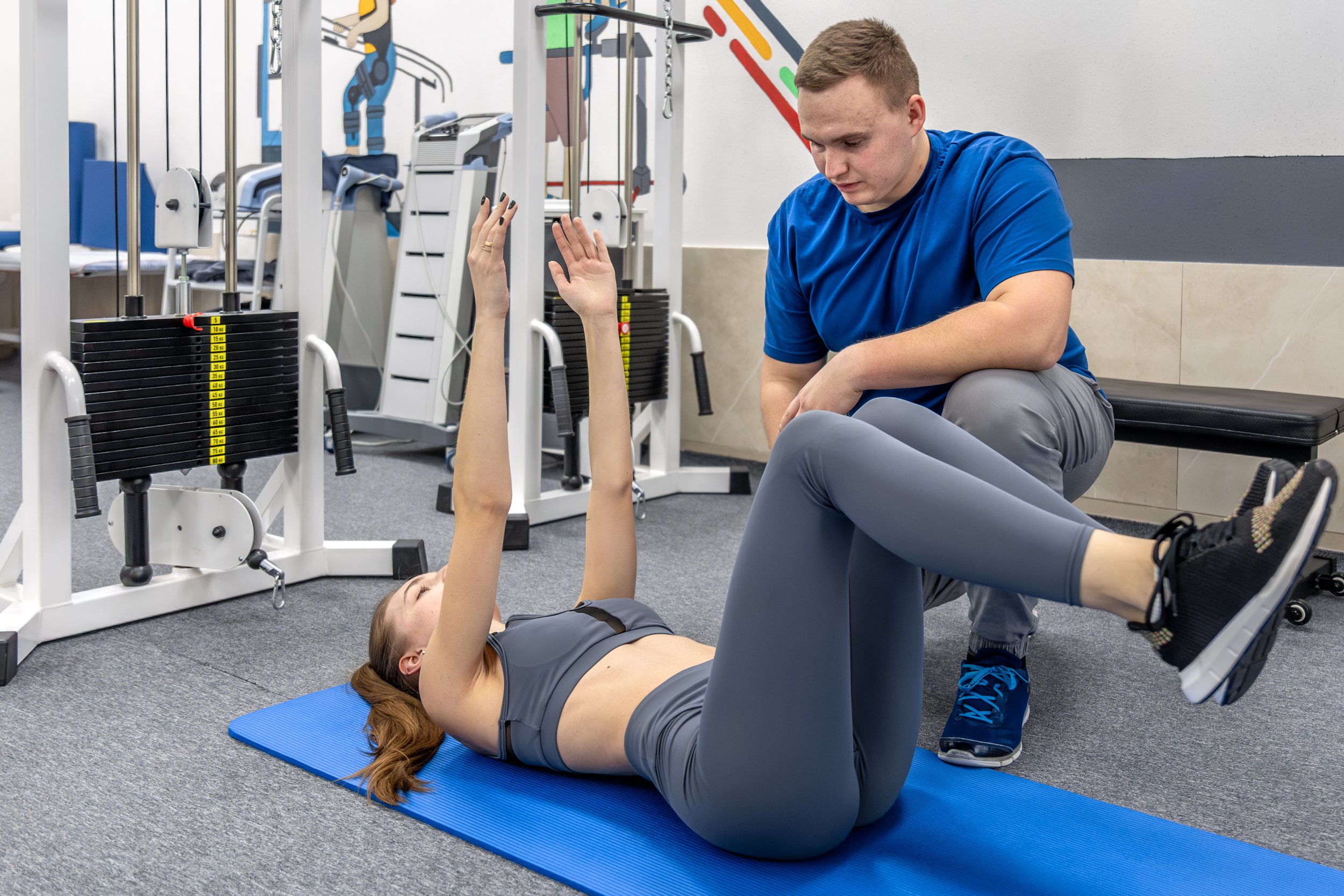
An exercise physiologist can help you gradually build back the strength and conditioning you've lost, while taking your symptoms into account.
Sciatica isn't just a problem with your back
This is an easy mistake to make.
If your back hurts and the pain travels down your leg, it's natural to focus entirely on the spine.
But when you squat, bend, walk, lift or carry something, your hips and legs are involved as well. Your trunk needs enough strength and endurance to keep everything working together.
If you've been protecting your back for a while, those other areas may not be contributing as well as they once did.
For example, stiff hips can change how you bend. Weak legs can make lifting from the floor harder. Poor trunk endurance can make repeated movements more tiring.
None of this means your hips or legs are the cause of your sciatica.
It simply means they can affect how much work your lower back has to do.
That's why exercise physiology for lower back pain often involves looking at the whole movement rather than repeatedly exercising the painful area.
What happens during an assessment?
There's no magic test that tells an exercise physiologist exactly what your sciatica needs.
The assessment is usually practical.
You may be asked about how your symptoms behave, what activities you have stopped doing and what you'd like to get back to. Your strength, movement, balance and general exercise tolerance may also be assessed.
The exercises then have to match your situation.
If you've got a physical job, your program needs to prepare you for lifting, carrying and being on your feet.
If you're trying to return to the gym, your rehabilitation needs to eventually include the types of movements you actually want to train.
If sitting through a workday is your main problem, that's relevant too.
A program doesn't have much value if it only works inside the clinic.
What about sciatica exercises?
There are thousands of sciatica exercises online.
Some are useful. The problem is that sciatica doesn't behave exactly the same way in everyone.
One person may tolerate bending quite well. Another may find certain positions aggravate their symptoms. Someone else may mainly struggle with prolonged sitting or walking.
So copying somebody else's exercise routine isn't necessarily the best way forward.
The same applies to lower back pain exercises. The right exercise is one that fits your current symptoms and helps you work towards the activities you need to perform.
As your tolerance improves, the exercises should change too.
You might start with basic strength and movement work and eventually progress to loaded squats, hinges, carries or other gym movements.
Getting stronger is part of making a return to normal
People sometimes expect the pain to disappear completely before they start challenging themselves again.
That can leave you waiting for a level of confidence that doesn't arrive on its own.
Strength and tolerance are built by gradually doing more.
That doesn't mean pushing through severe pain or ignoring changes in your symptoms. It means finding a sensible starting point and increasing the workload as your body adapts.
For someone returning to weight training, that could mean starting well below their old working weights and building from there.
For someone who doesn't train, it might mean getting stronger with everyday movements such as squatting, stepping, carrying and getting up from a chair.
The exercise should have a purpose beyond simply ticking off a set.
What if you've had sciatica more than once?
Recurring symptoms are worth looking at from a bigger perspective.
Think about what tends to happen before a flare-up.
Did your training suddenly increase? Have you been doing more physical work? Did you stop exercising for several months? Are you sitting for most of the day and then trying to do a lot of activity on the weekend?
Sometimes there is a clear pattern.
Other times there isn't.
Either way, improving your general strength and conditioning can give you more capacity to handle those demands.
That's one of the reasons exercise can be useful even when your sciatica isn't currently causing much pain.
Where Medicare may fit
For some people managing an ongoing health condition, exercise physiology may be accessed through a GP Chronic Disease Management Plan.
This can provide Medicare benefits for eligible allied health services, subject to the relevant requirements and annual limits.
Some providers also offer bulk-billed exercise physiology for eligible patients.
If you're considering seeing an exercise physiologist, ask your GP whether you meet the requirements for a GP Chronic Disease Management Plan and then check the provider's billing arrangements before your appointment.
You don't have to stay cautious forever
Sciatica can make you very aware of your back.
Every twinge gets noticed. Every awkward movement becomes something to think about. After a while, you can end up doing less and less simply because you're worried about setting things off again.
Rehabilitation should move you in the other direction.
Gradually.
The aim is to build enough strength and tolerance that bending, lifting, walking, sitting and exercising become ordinary things again rather than activities you have to constantly assess.
At Pursuit Physiotherapy in Springwood, exercise physiology can be part of that process for people recovering from sciatica and ongoing lower back problems.
The program can be adapted around your current ability, whether you're returning to the gym, managing a physical job or simply trying to get through normal daily activities without constantly thinking about your back.
If your sciatica has settled but you still feel weak, restricted or unsure about what you can safely do, contact Pursuit Physiotherapy in Springwood to discuss whether an exercise physiologist for sciatica is appropriate for your next stage of rehabilitation.