
Mind Muscle Connection: How Better Muscle Activation Can Improve Your Training
You know that frustrating feeling when you're training one muscle, but another one seems to be doing all the work.
You're trying to grow your glutes, but your quads are burning after every squat. You're working on your back, yet your biceps fatigue first. You keep changing exercises, adding more sets and trying to “feel” the muscle, but nothing seems to change.
That's usually when people start talking about the mind muscle connection.
It's easy to make this sound like a mental trick. Think about the muscle harder. Squeeze it. Slow the rep down.
Sometimes those things help.
But there is a real neurological process behind how you control and recruit your muscles, and that matters when you're training for strength or hypertrophy.
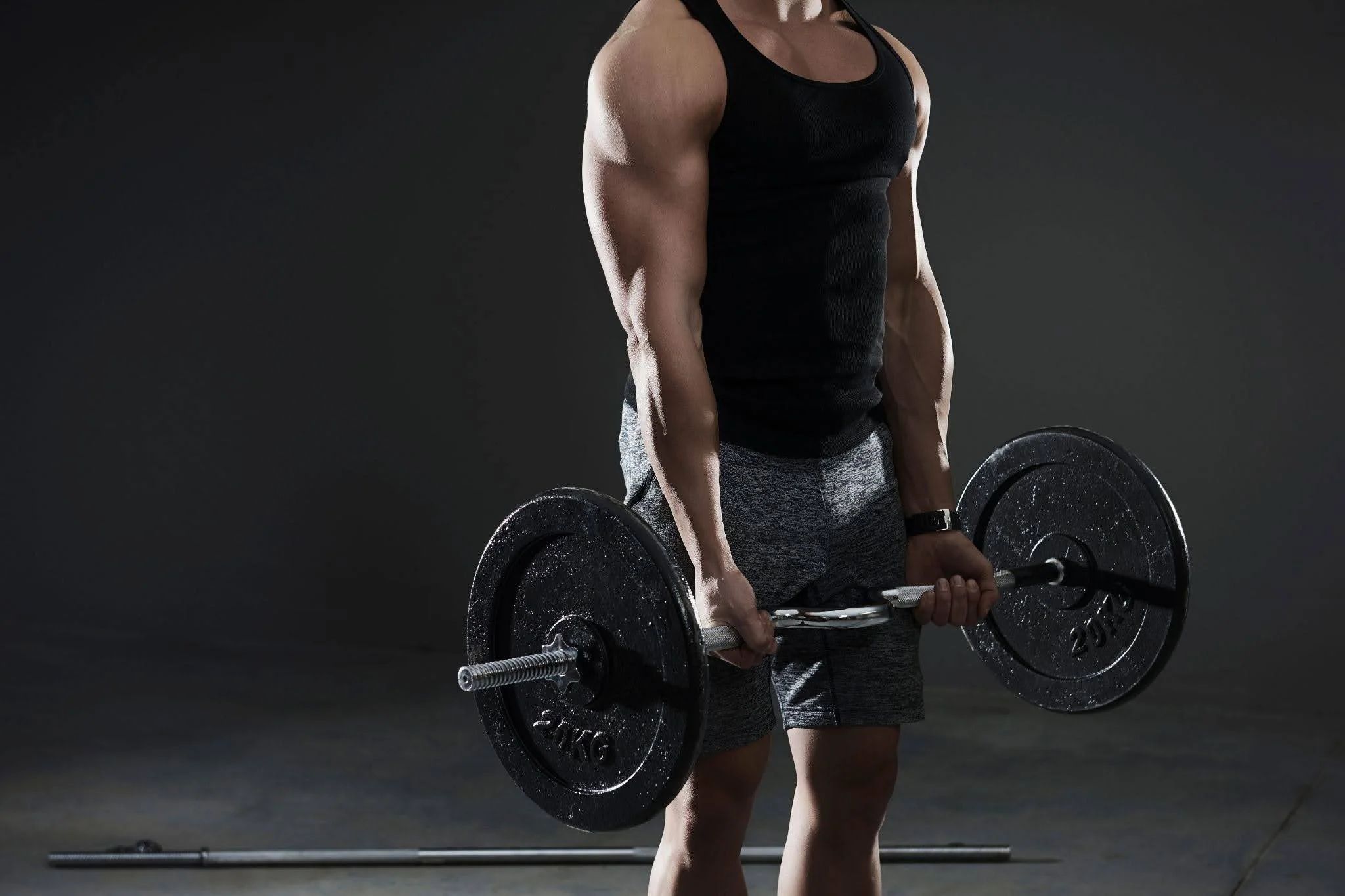
What is the mind muscle connection?
When you decide to move, your brain sends signals through the nervous system to the muscles involved.
At the same time, information comes back from your muscles and joints. Your brain receives feedback about things such as position, tension and movement.
You don't have to consciously think about any of this when you're squatting or pressing. Your nervous system handles most of it automatically.
The interesting part is that your body can get very good at a particular way of moving.
If you've spent years squatting with your quads doing most of the work, for example, your body may continue using that strategy even when your goal changes to building your glutes.
That's why simply telling yourself to “use your glutes” doesn't always fix it.
Why can one muscle take over?
Your body is always looking for a way to complete the movement.
That's not a bad thing.
If you need to stand up with a heavy bar on your back, your nervous system will coordinate whatever combination of muscles it can use to get you there.
The problem comes when that strategy doesn't match what you're trying to achieve in the gym.
A lifter might have enough strength to squat a heavy weight but struggle to load their glutes the way they want.
There could be a number of reasons.
Maybe ankle or hip movement is restricted. Maybe one side is weaker. Maybe a previous injury has changed the way they load their leg. Maybe their technique changes once they get tired.
Sometimes the problem is simply that they've practised the same movement pattern for a very long time.
That's why looking at the exercise itself can be more useful than immediately adding another exercise to the program.
How can NeuFit help?
At Pursuit Physiotherapy, Neubie neuromuscular therapy in Springwood can be used alongside physiotherapy and exercise when muscle activation or movement control needs a closer look.
The Neubie combines electrical stimulation with active movement. It can also be used during a scanning process as part of an assessment.
That doesn't mean the machine can tell you exactly why a muscle isn't growing.
It can't.
A proper assessment still needs to look at the person, their movement and their training.
For example, if your quads always take over during a squat, a physiotherapist might look at your hip and ankle movement, strength, previous injuries and the squat itself.
What happens when you slow down?
What happens when the load gets heavier?
Does one leg behave differently?
Does changing your stance make a difference?
NeuFit can then be used where it is clinically appropriate to provide another way of working on muscle activation and movement.
It's a tool, not a replacement for training.
What about muscle activation exercises?
You don't need a complicated warm-up before every gym session.
But if you're having trouble getting a particular muscle involved, a few muscle activation exercises can be useful before your main lift.
For example, someone struggling with glute recruitment might use controlled hip extension work or isometric holds before moving into their squats or deadlifts.
The idea isn't to fatigue the muscle before training.
It's to give yourself some practice controlling the movement first.
NeuFit can also be incorporated into active exercises. The person is still contracting the muscle and performing the movement while receiving electrical stimulation.
That part matters.
The goal isn't to lie still and have a machine do the work. The goal is to combine the stimulation with active movement and then see whether that carries over into the exercise you're actually training.
If you can activate your glutes during a light exercise but lose them completely once the squat gets heavy, that's useful information.
It tells you there is probably more to work on.
Does feeling the muscle mean you're building more muscle?
Not necessarily.
A big pump feels good, but it isn't a direct measure of hypertrophy.
You still need progressive resistance training, enough volume, appropriate exercise selection, recovery and nutrition.
The mind muscle connection is one part of the process.
If improving your control means you can consistently put more of the intended workload through a target muscle, that's useful.
But you shouldn't become so focused on feeling a muscle that you stop progressively challenging it.
Muscle needs a reason to adapt.
When can sports physiotherapy help?
You don't have to wait until you're injured to see a sports physio in Springwood.
Sometimes the problem is simply that your training isn't producing the result you expect.
Maybe one side always feels stronger.
Maybe your back takes over every hip hinge.
Maybe your shoulders feel different during pressing.
Or perhaps you've spent months trying to bring up one muscle without much progress.
A bodybuilding physio in Springwood can look at those issues in the context of your actual training.
That means considering the exercises you perform, your technique, training history, previous injuries, mobility and what happens when fatigue sets in.
For someone who trains regularly, that context matters.
A person training for bodybuilding may need a different approach from someone preparing for a powerlifting competition, even if both complain about the same muscle not “activating”.
The brain-muscle connection isn't only relevant to lifting
The same relationship between the nervous system and movement is important in neurological rehabilitation in Springwood.
Someone recovering from a neurological condition may have difficulty with strength, coordination, balance, sensation or motor control.
Rehabilitation involves practising movement and giving the nervous system useful information so that movement can become more controlled and functional.
That's obviously a different situation from someone trying to improve their squat.
But the nervous system is still part of the equation.
Your muscles don't operate independently from your brain.
What should you do if you can't feel the muscle?
Before adding another five exercises to your program, try going back to the movement you're already doing.
Reduce the load.
Slow the repetition down.
Pay attention to where you start losing control.
Try a slightly different variation.
Then gradually increase the weight again.
If the same muscle keeps getting pushed into the background whenever the exercise becomes challenging, that's worth investigating rather than simply doing more volume.
At Pursuit Physiotherapy in Springwood, the assessment can look at the movement, strength, mobility and training history together. Where appropriate, NeuFit technology can be incorporated into a strength-based rehabilitation approach to work on muscle activation and movement control.
For someone training for hypertrophy, a better mind muscle connection isn't about staring at your biceps in the mirror and trying to make them grow.
It's about improving how you control a movement, getting the muscles you want involved and then progressively loading them.
If one muscle consistently seems to get left behind despite consistent training, contact Pursuit Physiotherapy in Springwood to arrange an assessment.