
Musculoskeletal Physiotherapy in Springwood: The Hidden Link Between Your Tight Neck and a Clicking Jaw
A clicking jaw rarely shows up on its own.
Most of the time, there’s a second complaint sitting right beside it:
Tightness through the upper neck
Headaches around the temples or behind the eyes
Jaw pain that seems worse after desk work or stress
People often focus entirely on the jaw because that’s where the noise is coming from. But in clinic, the neck is usually part of the story too.
That’s why treating the jaw alone often doesn’t last.
We see this regularly in musculoskeletal physiotherapy Springwood assessments. Someone’s tried mouthguards, massage guns, stretches, even soft foods for weeks. The jaw settles briefly, then the clicking, headaches, or tension comes straight back.
Usually because the system around the jaw never changed.
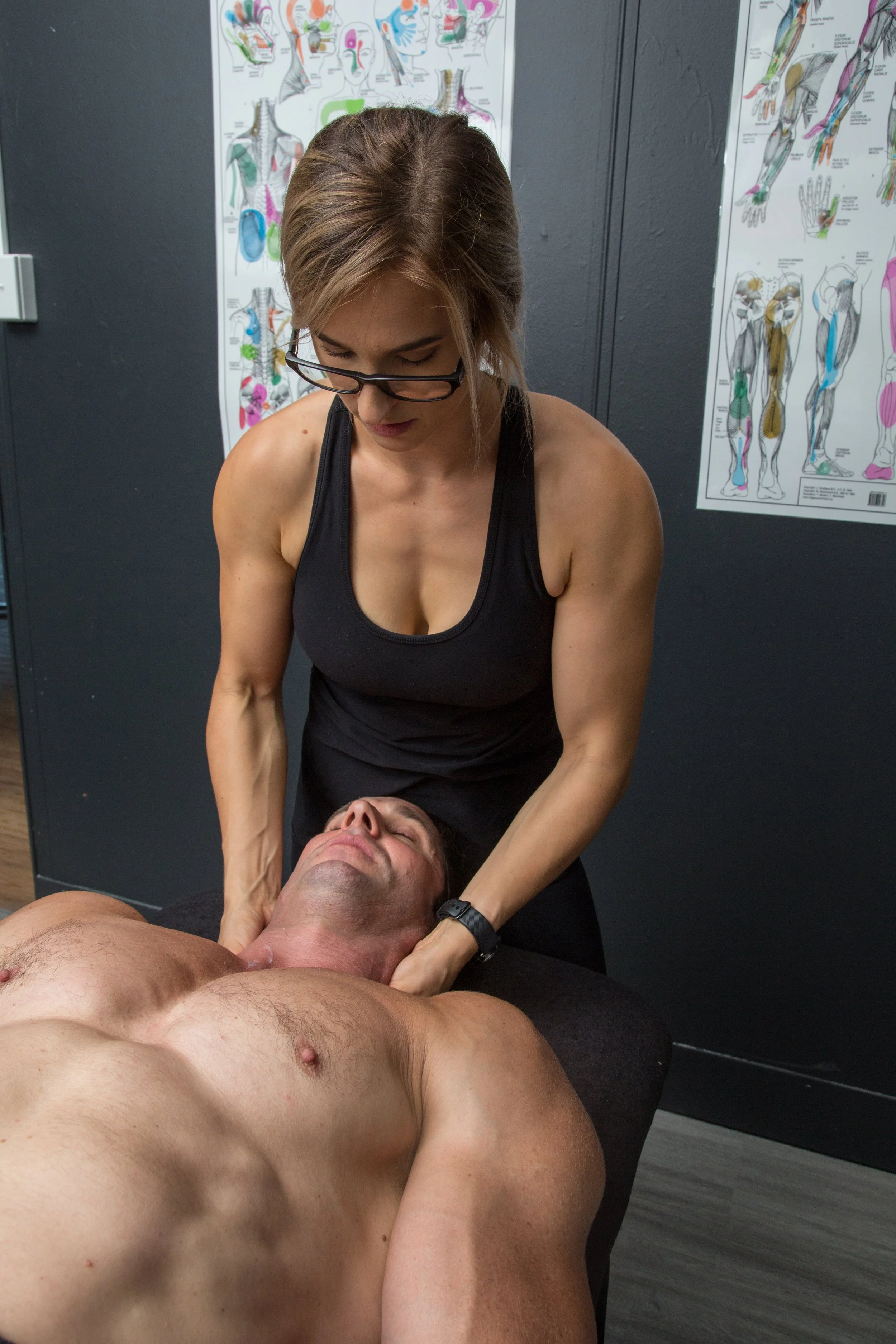
Your neck and jaw work like linked hinges
The easiest way to picture it is this:
Imagine a door with two hinges that are slightly out of alignment. The door still opens, but it drags, clicks, and wears unevenly over time.
That’s pretty similar to what happens between the jaw and upper neck.
The jaw joint, known as the temporomandibular joint (TMJ), doesn’t work in isolation. It relies heavily on the muscles and joints around the upper cervical spine, especially the top part of the neck sitting just underneath the skull.
You might hear terms like TMJ dysfunction, TMJ pain, or TMJ physiotherapy when talking to a doctor, dentist, or specialist. While TMJ technically refers to the temporomandibular joint itself, healthcare professionals commonly use the term when referring to jaw-related problems such as clicking, locking, stiffness, or pain. It's also common for doctors to refer patients for physiotherapy when TMJ symptoms are affecting eating, talking, headaches, or neck function.
When those joints stiffen or the surrounding muscles tighten:
Jaw movement changes slightly
The jaw can start tracking unevenly
Clicking becomes more common
Muscles around the face and neck start overworking
Sometimes the jaw itself is actually coping fine. It’s the mechanics around it that are messy.
Why desk posture quietly messes with the jaw
This is one of the biggest contributors we see.
Long hours at a desk shift the head forward without people noticing. The chin pokes out, the upper neck compresses, and the muscles around the jaw start changing position all day long.
Your body adapts to whatever position it spends the most time in.
So when the head sits forward constantly:
The jaw loses its natural resting position
Neck muscles tighten to hold the head up
Jaw muscles stay partially switched on
Clenching becomes more common
Joint pressure changes during chewing and talking
That’s often why people notice:
Jaw clicking and neck pain together
Jaw fatigue during eating
Headaches later in the day
Neck stiffness first thing in the morning
The posture itself isn’t “damaging” the jaw overnight. But over time, the repeated stress changes how the joint moves.
Why does my jaw ache more when I’m stressed?
Because stress changes muscle tension.
A lot of people clench without realising it, especially during work, driving, or sleep. The jaw muscles stay slightly contracted for hours at a time.
Now add that onto a stiff upper neck and poor desk posture.
The whole system becomes overloaded.
This is usually why the ache feels vague and hard to pinpoint. Sometimes it’s the jaw. Sometimes the temples. Sometimes under the ear or into the side of the neck.
The muscles all blend together.
Cervicogenic headaches and jaw tension are often connected
A cervicogenic headache is basically a headache driven by the neck.
The upper cervical joints share nerve pathways with parts of the jaw and face, which is why neck dysfunction can create symptoms that feel like:
Temple headaches
Eye pressure
Jaw tightness
Facial aching
Pain behind the ears
This is why some people spend months chasing “jaw problems” when the upper neck is actually the bigger driver.
Good cervicogenic headache relief often involves improving neck mobility and reducing tension through both the cervical spine and jaw muscles together.
The jaw muscles are usually working too hard
A big part of TMJ pain treatment Springwood sessions is figuring out which muscles are overworking and why. Many people referred for TMJ physiotherapy are surprised to learn the treatment often involves both the jaw and neck, rather than focusing solely on the temporomandibular joint itself.
Common culprits include:
Masseter (main chewing muscle near the jawline)
Temporalis (muscle around the temples)
SCM muscles in the neck
Upper traps
Deep neck stabilisers that have stopped contributing properly
When some muscles stop doing their job efficiently, others compensate.
That compensation creates the constant “tight” feeling people struggle to stretch out on their own.
Why dry needling can feel surprisingly effective
This is usually the part people are unsure about until they try it.
Targeted dry needling around the jaw and upper neck can reset muscle tension very quickly when the right muscles are treated.
Not because it’s magic. Because tight muscles often stay locked in a guarded state.
Precise needling can help:
Reduce protective muscle tension
Improve blood flow
Decrease referred pain into the jaw and head
Restore more normal muscle activation
Sometimes people immediately notice:
The jaw opening more evenly
Less pulling around the temples
Reduced headache pressure
Neck movement feeling lighter
The important part is precision. Randomly attacking sore spots rarely works well. The assessment matters more than the needle itself.
Remedial massage helps, but usually isn’t enough alone
A good remedial massage for neck tension can absolutely reduce symptoms.
The problem is that if the jaw mechanics and posture aren’t changing, the tightness usually rebuilds pretty quickly.
That’s why treatment often combines:
Hands-on release work
Dry needling
Joint mobility work
Jaw control exercises
Postural retraining
Strengthening for the deep neck muscles
The goal isn’t to “force” perfect posture. It’s to reduce the amount of unnecessary tension your body is carrying all day.
Clicking doesn’t always mean damage
This part matters.
A clicking jaw sounds alarming, but clicking alone doesn’t automatically mean serious joint damage.
Lots of jaws click without becoming painful.
The bigger concern is when the clicking comes with:
Locking
Pain during chewing
Reduced opening
Frequent headaches
Increasing neck tension
That’s usually when it’s worth getting things assessed properly.
Why treating the neck changes the jaw
This is the piece many people miss.
The jaw sits on the neck. If the base underneath it is stiff, overloaded, or poorly controlled, the jaw mechanics often compensate.
That’s why isolated jaw treatment frequently plateaus.
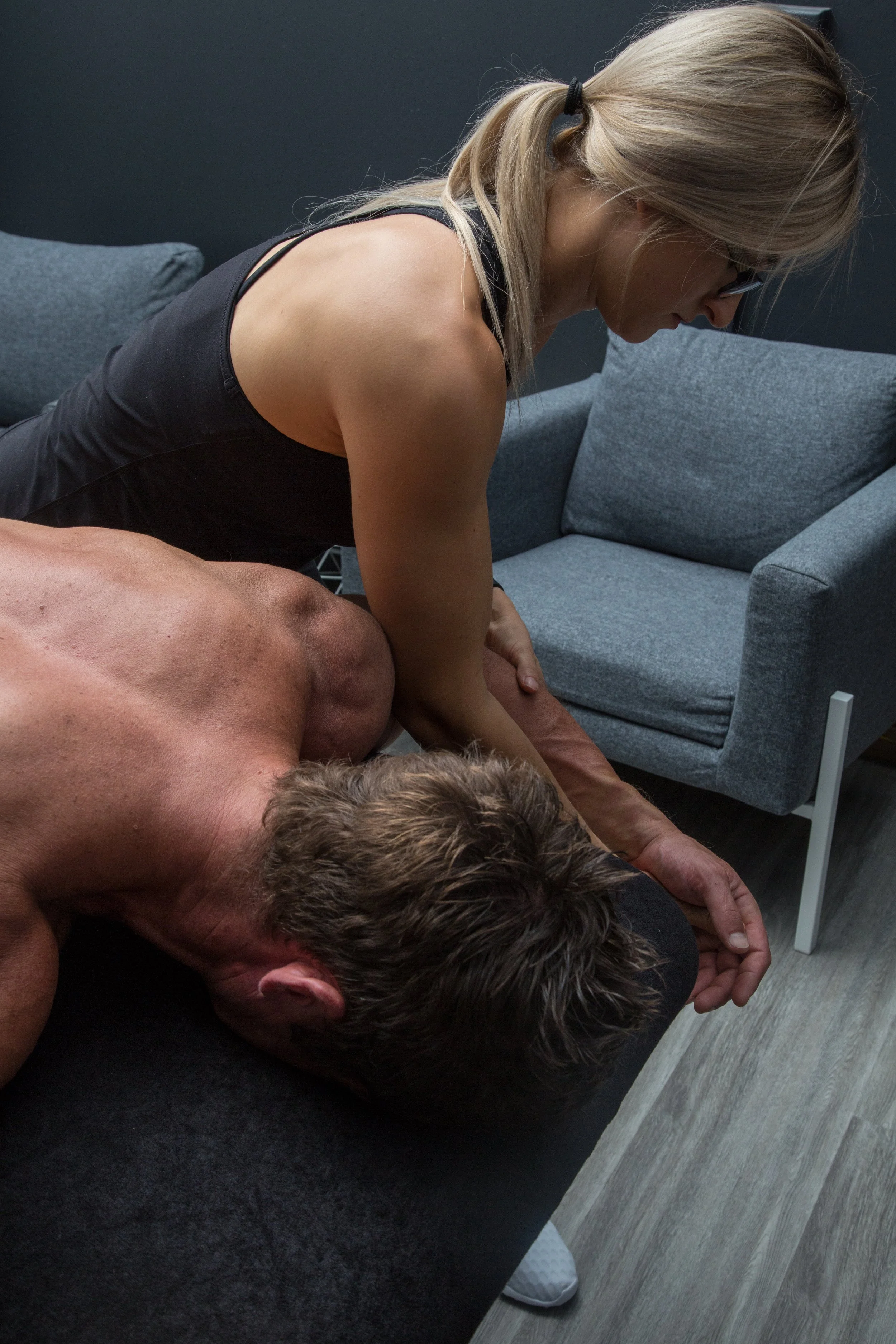
In musculoskeletal physiotherapy Springwood, we’re usually looking at the whole system:
Neck mobility
Jaw tracking
Muscle tension patterns
Breathing habits
Desk posture
Stress-related clenching patterns
Because the jaw is rarely acting alone.
When it’s worth getting checked
If you’ve been dealing with:
Jaw clicking and neck pain
Recurring headaches
Jaw fatigue or tightness
Pain around the temples or ears
Stiffness after desk work
…it’s worth having both the neck and jaw assessed together rather than chasing symptoms one area at a time.
At Pursuit Physiotherapy, we help people across Springwood, and Underwood manage jaw tension, headaches, neck stiffness, and TMJ-related pain with practical treatment that focuses on the whole system, not just the noisy joint.