
Physiotherapy for Sports Injuries: How to Know When You're Ready to Train Again
Getting back to training after an injury can be more complicated than expected.
You might be walking normally again, so you assume your ankle is ready for a run. Or your shoulder has settled enough for everyday activities, but the first heavy bench press tells a different story. Sometimes the pain is manageable until you try to train at your usual intensity.
That is often the frustrating part. You want to get moving again, but you don't want to undo the progress you've made.
Physiotherapy for sports injuries helps bridge the gap between recovering from an injury and handling the demands of your sport again. The process involves finding out what is limiting you, rebuilding your capacity and working towards the movements you need to perform.
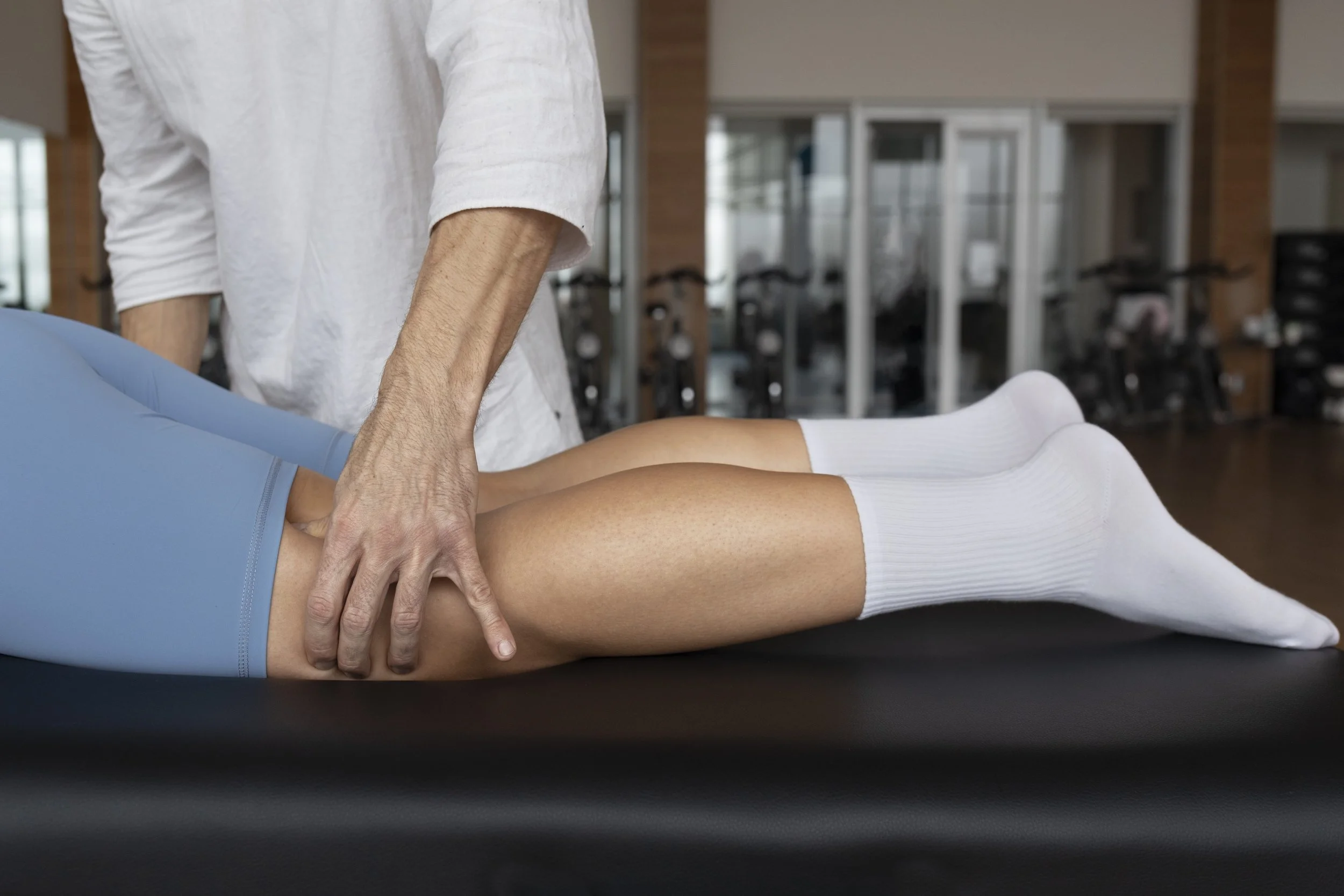
Your injury needs more than a quick look
When you book a sports physiotherapist, the conversation matters as much as the physical assessment.
Where does it hurt? When did you first notice it? Has your training changed recently? And what can you no longer do comfortably?
Those answers help build a picture of the problem. A sudden hamstring injury during a sprint is different from hamstring discomfort that has crept up over several weeks. Treating them as the same problem would miss some important details.
Your physio will then assess the affected area and the movements relevant to your symptoms. This might involve checking strength, joint movement, balance or how you perform a particular exercise. If you are a weightlifter, your usual lifts may be relevant. For a runner, the assessment may focus on the physical demands of running.
The point is to understand what is going on before deciding what to do about it.
Some injuries can be managed through physiotherapy alone. Others need a GP, sports doctor or further investigation. If there are signs of a serious injury, getting the right medical assessment takes priority over starting a rehabilitation programme.
Why returning too soon can set you back
One mistake is using everyday comfort as the only measure of recovery.
Take an ankle sprain. After a period of rest, walking around the shops might feel completely normal. Playing netball is another matter. You need to push off, land, turn quickly and sometimes react to another player without thinking about every movement.
Those demands put a different load through the ankle.
This is why sports injury rehabilitation needs to prepare you for the activity you actually want to return to. Getting through daily tasks is progress, but it doesn't automatically mean you're ready for competition.
Rehabilitation might start with restoring movement and building strength. Later, the exercises can become faster, heavier or more specific to your sport. Hopping, sprinting, landing and changing direction may all have a place, depending on the injury.
There is no prize for rushing through these stages. Equally, there is no reason to avoid every challenging movement once your physio considers it appropriate. The aim is to increase the demands as your body becomes capable of handling them.
Do you have to stop training completely?
Not necessarily.
A sports injury can mean changing your training rather than abandoning it. Depending on the injury, you may be able to work on other areas, modify painful exercises or reduce the load while your symptoms settle.
For someone who enjoys strength training, that could mean adjusting pressing movements while a shoulder recovers, or temporarily changing lower-body exercises during a back injury. A runner might need to reduce distance or intensity before building up again.
The tricky part is knowing what to change.
Training through pain because you don't want to lose progress can make an injury harder to manage. On the other hand, stopping all activity when suitable movement is possible may leave you feeling weaker and less prepared for your return.
A sports injury physio can help you work out what is reasonable for your situation. That advice should account for the injury, your current symptoms and the demands of your training, not just tell you to rest until everything feels perfect.
What does a safe return to sport look like?
There isn't a single day when every injury is suddenly ready for full training.
Instead, your return should reflect what you can do now and what your sport asks of you. A runner needs to tolerate running volume and speed. A footballer needs to manage acceleration, deceleration and changes of direction. Someone returning to powerlifting needs to rebuild confidence and capacity under load.
Your physio may use strength tests, balance tasks or sport-specific movements to check progress. How you respond after training is useful information, too. If your symptoms flare up considerably later that day or the next morning, it may be a sign that the session needs adjusting.
You also need to feel comfortable performing the movements again. It is common to be cautious after an injury, particularly if the original incident was painful or unexpected. Gradual exposure to the movements you have been avoiding can help you rebuild confidence while your physical capacity improves.
Return to sport is a process, not a date on the calendar. You may move from individual drills to modified training, then full sessions and competition. The pace depends on the injury and your progress.
When an injury keeps coming back
If the same pain returns every time you increase your training, it is worth looking at the pattern rather than repeating the same cycle of rest and return.
Perhaps you feel fine during the first few runs but develop pain when your weekly distance increases. Maybe your shoulder settles when you stop lifting, then becomes sore again as soon as you return to your previous weights.
In these situations, the next step is to review what your body is being asked to do. Your strength may still be below the level your sport requires. Your training load may be increasing too quickly, or the original problem may need further assessment.
Good injury rehabilitation should help you understand how to progress, not leave you guessing when to add weight, distance or intensity. If your symptoms keep returning, the plan may need to change.
Finding sports physiotherapy in Springwood
At Pursuit Physiotherapy, rehabilitation is built around the activities you want to get back to. For someone searching for sports physiotherapy Springwood, that might mean returning to weekend sport, getting back to running or lifting without the same pain interrupting every session.
The starting point is an assessment of the injury and what it is stopping you from doing. From there, rehabilitation can focus on the areas that need work, with progression towards the physical demands of your chosen activity.
You don't have to be a competitive athlete to seek help. If you have been putting off training, modifying every session around an injury or repeatedly losing progress when you return, a sports physiotherapist can help you work out your next step.
The aim is to get you moving forward with a clearer plan, rather than leaving you to decide on your own when it is safe to push harder.