
Sports Massage Benefits: Why Good Treatment Goes Beyond Muscle Relief
Most people start looking into sports massage benefits because something feels tight.
It could be your calves after a long run. Your shoulders after a week behind a desk. Your back after a heavy deadlift session. You stretch, grab a foam roller, maybe even use a massage gun. It helps for a little while, then the tightness creeps back.
That's because tight muscles are often responding to something else.
Sometimes they're protecting a joint that isn't moving well. Sometimes they're picking up the slack for weaker muscles. Sometimes they're simply overloaded after weeks of hard training or repetitive work.
That's why sports massage in Springwood isn't treated as a luxury at our clinic. It's used as a clinical tool to improve movement, reduce unnecessary muscle tension, and help people recover without waiting for a minor problem to become an injury.
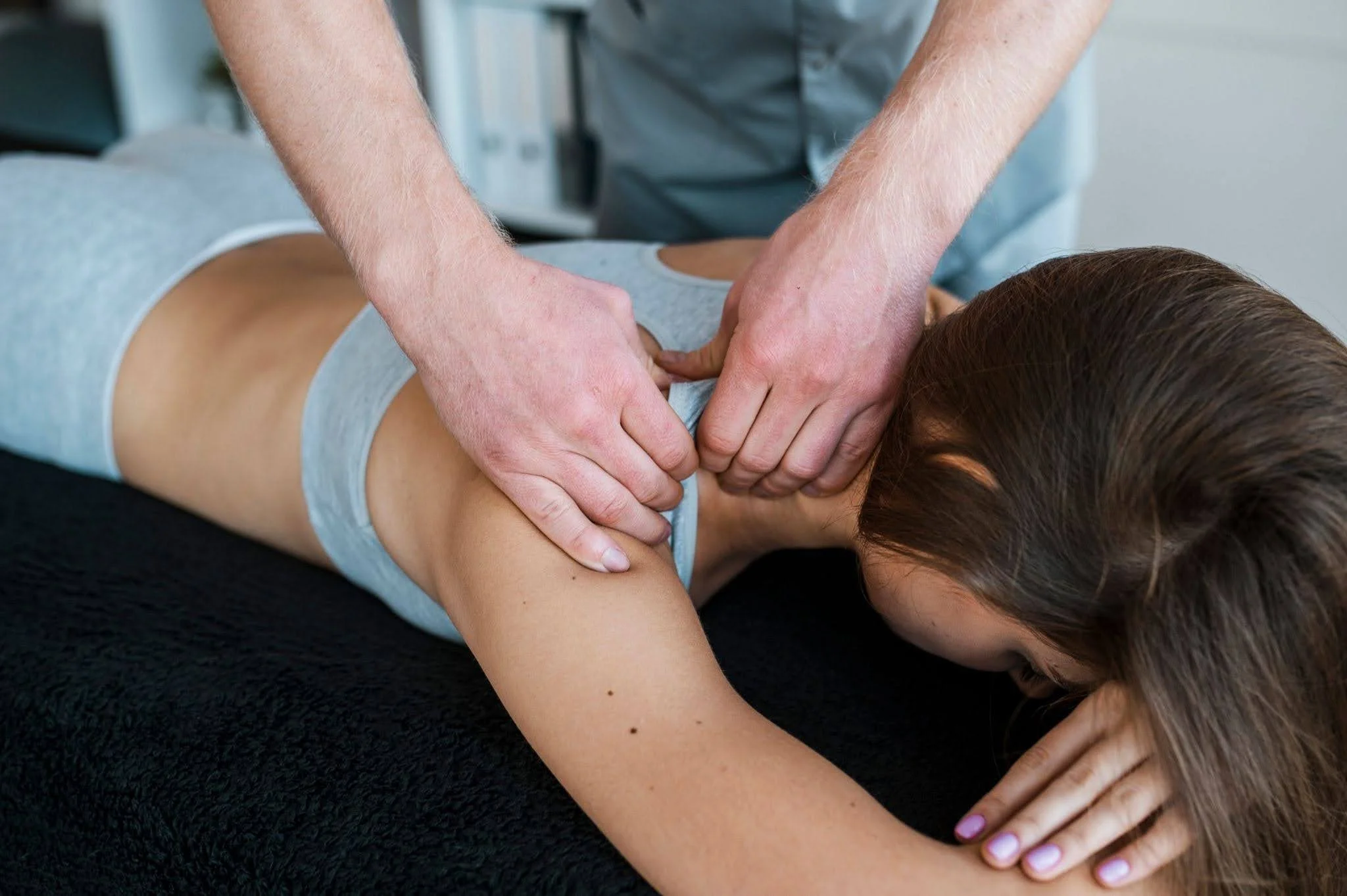
What are the real sports massage benefits?
Ask ten people why they book a sports massage and you'll probably hear ten different answers.
Some want to recover faster after training. Others are trying to get rid of a stiff neck that never seems to loosen. Some are preparing for an event, while others simply want to move without feeling restricted.
The common thread is movement.
The biggest sports massage benefits aren't just about making muscles feel softer. They're about helping your body move the way it was designed to.
When movement improves, people often notice:
Less muscle tightness during the week
Better joint mobility
Easier warm-ups before training
Reduced post-workout soreness
Better recovery between sessions
Less compensation from surrounding muscles
For athletes, active adults, and people with physically demanding jobs, those small improvements can make everyday movement feel much easier.
Tight muscles aren't always the problem
One of the biggest misconceptions is that a tight muscle is a bad muscle.
Not necessarily.
Imagine you've got one employee doing the work of three people.
They're going to get tired.
They're going to complain.
Muscles behave in much the same way.
If your hips have lost mobility, your lower back often works harder.
If your upper back is stiff, your neck and shoulders usually pick up the extra load.
The muscle feels tight because it's working overtime.
Massage helps reduce that overload, but it also gives your physiotherapist valuable information about why the muscle became tight in the first place.
That's why treatment is rarely just about chasing sore spots.
Sports massage is different from a relaxation massage
People often assume all massages are basically the same.
They're not.
A relaxation massage is designed to reduce stress and help you unwind.
Clinical sports massage has a different purpose.
The focus is on improving how muscles, tendons, and connective tissue move so your body can handle training, work, and everyday activities more efficiently.
During sports massage in Springwood, treatment is tailored to what your body actually needs.
That might include:
Deep tissue techniques
Trigger point therapy
Targeted compression
Muscle release around restricted joints
Assisted stretching
Movement assessment before and after treatment
Sometimes the pressure is firm.
Sometimes it isn't.
The goal isn't to make treatment painful.
The goal is to improve function.
Why your body feels so stiff after hard training
Most people know the feeling.
You finish a heavy gym session feeling pretty good.
The next morning isn't too bad either.
Then forty-eight hours later, walking downstairs suddenly becomes a challenge.
That's Delayed Onset Muscle Soreness (DOMS).
It's a normal response after demanding exercise, particularly if you've increased your training volume or introduced something new.
Massage doesn't eliminate DOMS overnight.
If anyone tells you it does, they're overselling it.
What it can do is reduce the protective muscle guarding that often develops around sore muscles. Better circulation and improved tissue movement can make those first few days feel much more manageable.
If you're dealing with post workout muscle soreness in Underwood, that often means you're able to keep moving instead of spending several days feeling stiff every time you stand up.
Light movement combined with good recovery usually works far better than complete rest.
Your muscles need to slide, not just stretch
Stretching gets plenty of attention.
What people don't often think about is how muscles move against each other.
Every muscle is surrounded by fascia, which is a thin layer of connective tissue allowing different muscles to glide smoothly during movement.
Picture two sheets of paper.
When they're dry, they slide across each other easily.
Wet them slightly and suddenly they stick together.
Your muscles can develop similar restrictions after heavy lifting, repetitive work, or previous injuries.
When those tissues don't glide well, movement becomes less efficient.
That doesn't always cause pain straight away.
Sometimes it simply feels like you can never quite loosen up.
One reason people seek deep tissue therapy in Logan is to improve that sliding movement between tissue layers rather than simply applying more pressure to sore muscles.
That's also why experienced clinicians don't spend an hour digging into every tight spot they find.
They're looking for the areas that are actually affecting movement.
More pressure isn't always better
There's an old belief that the harder the massage, the better the result.
It isn't true.
If you've ever found yourself holding your breath or gripping the table because the treatment hurts so much, your muscles are probably doing exactly the opposite of relaxing.
Good sports massage isn't about proving how tough you are.
It's about using the right amount of pressure at the right time.
Sometimes firm pressure works well.
Other times, slower and more controlled techniques allow the muscles to relax far more effectively.
That's one reason clinical treatment often feels very different from the "no pain, no gain" massages people expect.
It isn't about winning a pain competition.
It's about helping your body move better.
Why Looking After Your Muscles Before They Break Down Makes Sense
One of the biggest mistakes people make is waiting until something hurts before doing anything about it.
The calf has been tightening for weeks.
The shoulders feel blocked every time you press overhead.
Your hips need twenty minutes of stretching before they feel ready to squat.
None of those things usually happen overnight.
Your body is often giving you small warnings long before an injury forces you to stop training.
One of the lesser-known sports massage benefits is that it gives you the opportunity to deal with those warning signs early. Instead of waiting until pain changes how you move, you're helping your muscles recover before they become the weak link in the chain.
Recovery is part of training
Most people think training is what happens in the gym.
In reality, your body gets stronger afterwards.
Every hard session creates small amounts of stress in your muscles, tendons and connective tissue. Given enough recovery, your body adapts and becomes more resilient.
Without enough recovery, those tissues stay overloaded.
That's when people often notice:
The same muscles always feel tight
Recovery takes longer than it used to
Small aches keep returning
Warm-ups become longer
Movement starts feeling restricted
This is where athletic recovery massage can fit into a broader recovery plan.
It isn't replacing strength work or mobility training. It's helping your body recover well enough to keep doing those things consistently.
Sports massage works best alongside physiotherapy
Massage can absolutely reduce muscle tension.
But if the reason for that tension never changes, the tightness usually comes back.
That's why we often combine massage with movement assessment, exercise, and rehabilitation.
During a soft tissue physio Springwood appointment, we're not only looking at the sore muscle.
We're asking questions like:
Why is this muscle working so hard?
Is another joint contributing?
Has an old injury changed your movement?
Is your training load appropriate?
Could a simple exercise stop this from returning?
Sometimes the answer is surprisingly simple.
A stiff ankle can overload the calf.
Limited hip movement can make the lower back work overtime.
Reduced shoulder mobility can leave the neck doing more than its fair share.
Treating the muscle helps, but improving the way your body moves usually creates longer-lasting results.
Sports massage vs relaxation massage
Although both involve hands-on treatment, they serve different purposes. A relaxation massage is generally focused on reducing stress, helping you unwind, and promoting an overall sense of relaxation. It usually involves the whole body with gentle to moderate pressure.
Clinical sports massage is more targeted. It focuses on specific areas of muscle tightness, movement restrictions, or recovery needs, with the pressure adjusted according to the tissue being treated. Treatment may also include movement assessment to help identify what could be contributing to the problem.
Neither approach is necessarily better than the other. It comes down to what you're trying to achieve. If you want to switch off after a stressful week, a relaxation massage can be a great choice. If you're looking to improve movement, recover from training, or manage recurring muscle tightness, sports massage is usually the more appropriate option.
You don't have to be an athlete
The name "sports massage" puts a lot of people off.
They assume it's only for elite athletes.
It's not.
Some of the busiest people we see have never played competitive sport.
That includes:
Office workers with neck and shoulder tension
Tradespeople lifting every day
Nurses and healthcare workers
Parents carrying young children
Weekend golfers
Recreational runners
Gym members training for general fitness
Your muscles don't really care whether the workload comes from deadlifts or eight hours on a construction site.
If the workload exceeds your body's ability to recover, tension builds either way.
When should you think about booking?
You don't need to wait until you're injured.
It may be worth getting assessed if you notice:
The same muscles constantly tightening
Recovery slowing after training
Joint stiffness affecting your technique
Reduced movement compared to normal
Ongoing soreness that never completely settles
Feeling like you're always stretching the same areas
These issues are often much easier to manage early than after they've changed the way you move.
Looking after your body before problems build
The biggest sports massage benefits aren't measured by how loose your muscles feel when you leave the clinic.
They're measured by what happens afterwards.
Can you move more freely?
Can you train without the same restrictions?
Can you get through work without constantly rubbing your neck or stretching your back?
That's what we're aiming for.
At Pursuit Physiotherapy, we provide sports massage in Springwood as part of a broader treatment approach that focuses on movement, recovery, and long-term function. Whether you're dealing with persistent tightness, looking for deep tissue therapy, managing post workout muscle soreness in Underwood, or simply wanting to move better, treatment is tailored to the way your body moves, not just where it hurts.
The goal isn't to chase tight muscles every few weeks.
It's to help you recover well, move with confidence, and keep doing the activities you enjoy for years to come.